Altitude
519 m a.s.l.
Coordinates
43° 45′ 52.31″ N
12° 22′ 40.55″ E


Altitude
519 m a.s.l.
Coordinates
43° 45′ 52.31″ N
12° 22′ 40.55″ E
Corso Giovanni XXIII, 3
61021 Frontino (PU)
Italy
Tel.: +(39) 0722.71131
Fax: +(39) 0722.71342
www.comune.frontino.pu.it
comune.frontino@provincia.ps.it
Contact person
Roberta RAGGI
Tel.: +(39) 0722.71131-1
Mob.: +(39) 338.4720245
comune.frontino@provincia.ps.it
Corso Giovanni XXIII, 3
61021 Frontino (PU)
Italy
Tel.: +(39) 0722.71131
Fax: +(39) 0722.71342
www.comune.frontino.pu.it
comune.frontino@provincia.ps.it
comune.frontino@emarche.it
Take a look at some photos of the town
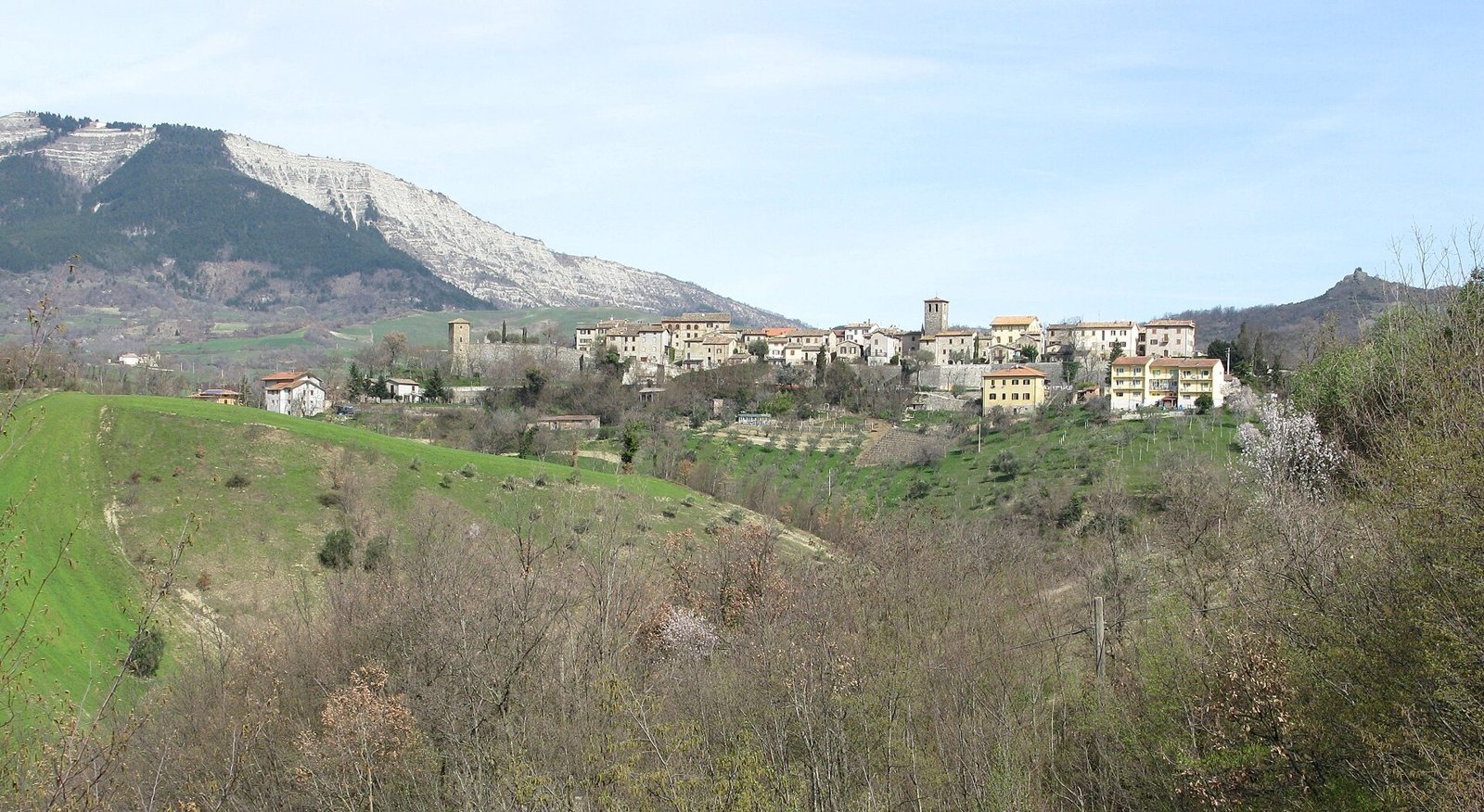
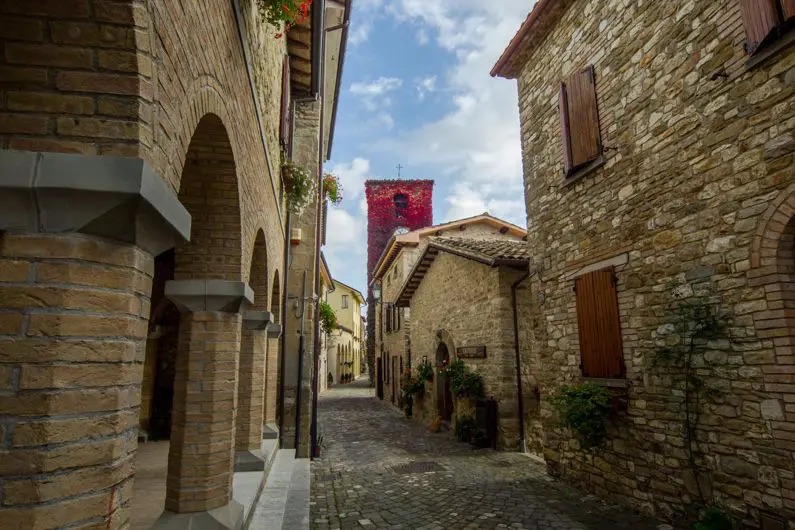
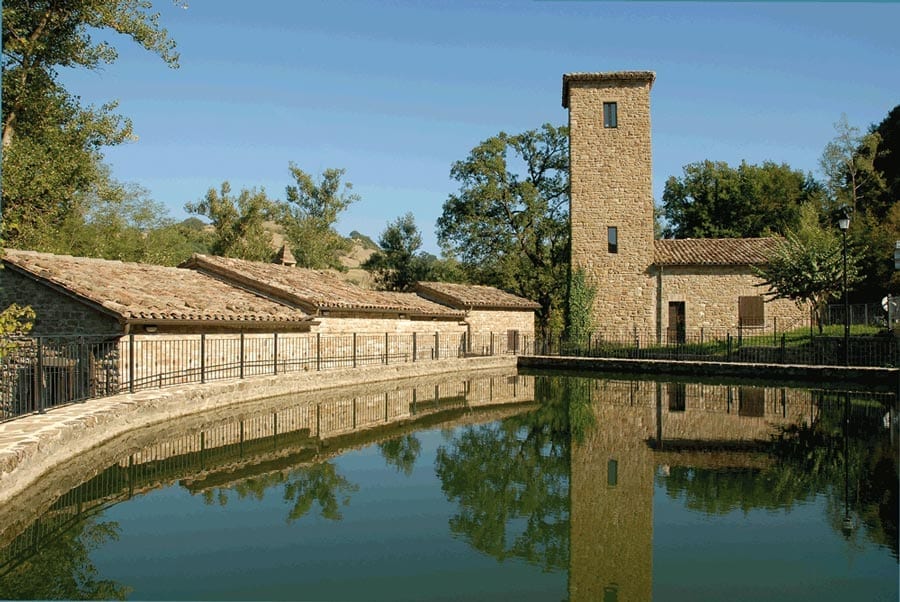
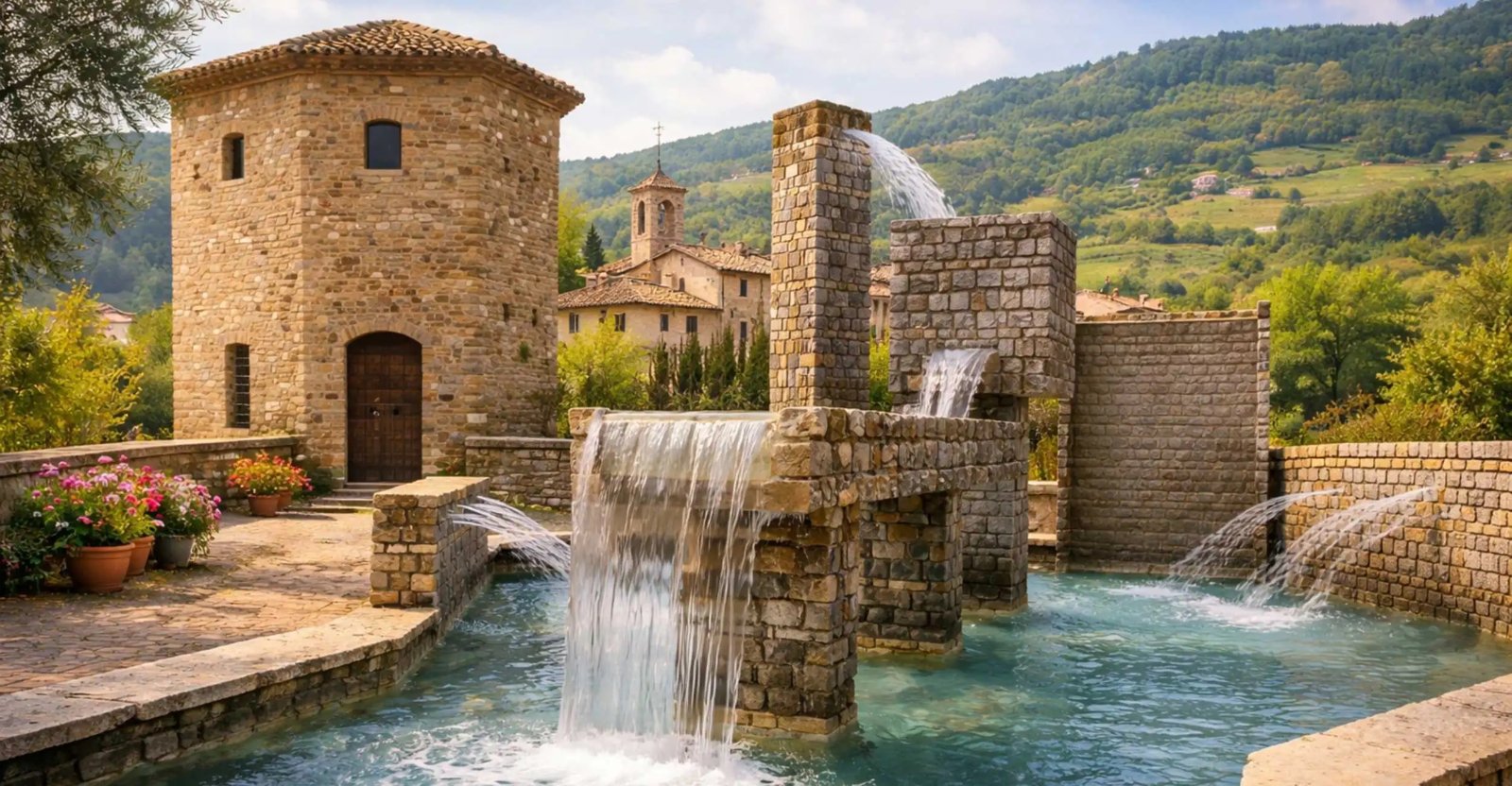
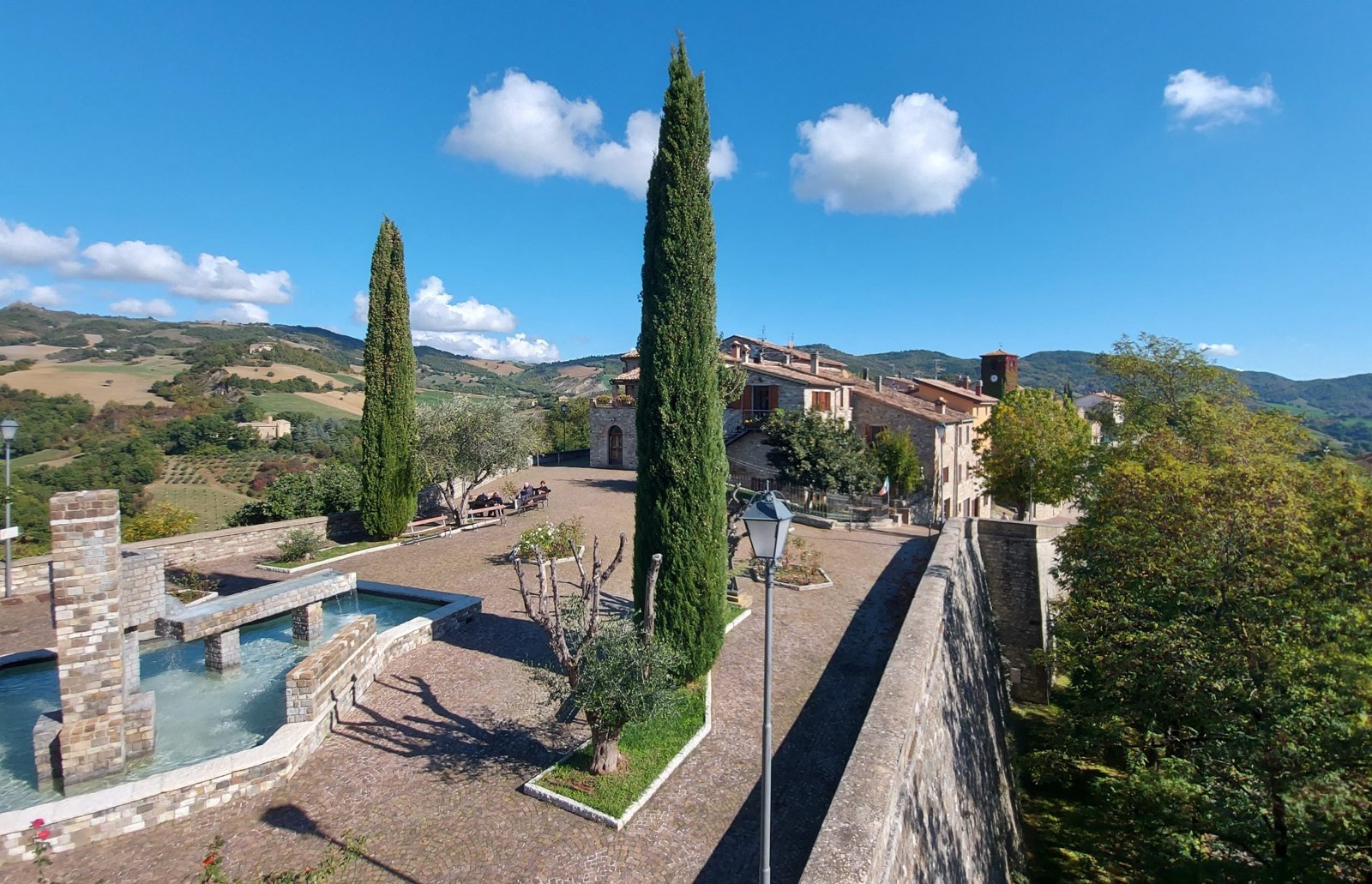
A small jewel of the Montefeltro, Frontino rises on a rocky spur at the foot of Monte Carpegna, in a strategic position that in the Middle Ages made it a stronghold contested between the Malatesta and the Montefeltro. The village, among the smallest in Italy, preserves its medieval layout intact, with the walls, the civic tower and the stone alleys that open onto wide panoramas towards the Apennines. Linked for centuries to the nearby Franciscan convent of Montefiorentino, one of the oldest in the Marche, Frontino was a fief of the Montefeltro and then of the Della Rovere, following the fortunes of the Duchy of Urbino until its passage to the Papal States. The ancient mill on the Mutino stream bears witness to the rural and artisan vocation of the community, which for generations lived on agriculture, sheep-farming and small crafts. The seasons still mark the life of the village today, between the bright colours of autumn in the woods and the muffled silence of the Apennine winter. Recognised among "The Most Beautiful Villages of Italy" and awarded the Orange Flag of the Touring Club, Frontino is today a silent and authentic place, where time seems to have stopped amid the sacred, nature and country memory, an ideal starting point for excursions in the Parco del Sasso Simone e Simoncello, among ridges, beech woods and ancient paths that tell the story of a borderland, suspended between the Marche, Romagna and Tuscany, where stone, woods and faith have shaped for centuries the face of this tiny Apennine village.
The heart of the village is the square with the civic tower and the town hall, from which the cobbled alleys enclosed by the walls branch off, a compact maze of stone glimpses where every corner guards the ancient flavour of the Montefeltro. Just outside the built-up area stands the convent of Montefiorentino, with the splendid Cappella dei Conti Oliva, a Renaissance masterpiece that guards altarpieces and funerary monuments of great value, testimony to the long Franciscan presence in the valley. Worth seeing is the ancient Mulino di Ponte Vecchio, restored, which recounts the peasant civilisation of the Mutino valley and the toils of an economy tied to water and land. The territory is dominated by the mass of Monte Carpegna and by the Sasso Simone e Simoncello nature park, a paradise for trekking, mountain biking and spotting Apennine wildlife, among deer, roe deer and birds of prey that populate the woods and upland pastures. From the belvederes of the village the gaze ranges over the clay hills and woods of the Montefeltro, with glimpses that on clear days reach San Marino and the mountain ridge, in a panorama that changes with the seasons and with the light. Frontino is moreover a stopping point along the itineraries that connect the castles and fortified villages of the hinterland, a mosaic of fortresses, parish churches and ancient paths that invite you to discover at leisure a territory rich in history, spirituality and unspoilt nature, far from the frenetic rhythms of modernity.
The table of Frontino is the honest one of the Montefeltro mountains, made of bold flavours and genuine products, the fruit of a country tradition handed down from generation to generation. Queen is the crescia sfogliata, cooked on the testo and filled with cured meats and herbs, accompanied by local cured meats such as prosciutto and salame. Among the cheeses the celebrated formaggio di fossa stands out, aged in the tuff caves, with an intense and unmistakable taste. The first courses are those of tradition: tagliatelle, passatelli and maccheroncini dressed with ragù or with truffle, which these woods yield in several varieties throughout the year. There is no shortage of porcini mushrooms, chestnuts and game dishes, together with pulse soups and field vegetables, cooked according to simple and ancient recipes. Completing the pantry are honey, jams and the oil of the hills, products that tell of the deep bond between the community and its land. The sweets are the simple ones of the country houses, from tarts to biscuits, often accompanied by a glass of the hill wine, perhaps before the fireplace on the long winter evenings. The fairs and festivals of the village, which follow the rhythm of the seasons and of the religious festivities, are the best occasion to savour these products in a convivial and authentic atmosphere, amid the aromas of the cooking of old and the genuine hospitality of a small mountain community that has managed to keep its flavours and its customs intact, handed down with pride from generation to generation.